
Are you willing to put your portfolio at risk because your candidates or party have a bad election night? In this midterm election, more people are vulnerable to making financial mistakes than in any previous midterm because political emotions and polarization are so elevated.

Don’t fall for this temptation. People who let their political concerns influence their portfolio are making two crucial mistakes.
They elevate politics to the level of identity and feel compelled to adjust their portfolio to express that identity and negative emotions.
They ignore the evidence that political results aren’t key predictors of market results.
A recent academic paper¹ explored how political identity feeds into portfolio adjustments. The authors examined whether the level of polarization led to swings in market expectations. They found that the most polarized voters believe political results move expected returns. The chart below shows the percentage of polarized voters who believe the market will generate a positive return during the administration. Polarized Republicans turned pessimistic as soon as Biden was elected, then swung back to optimism when Trump was reelected.
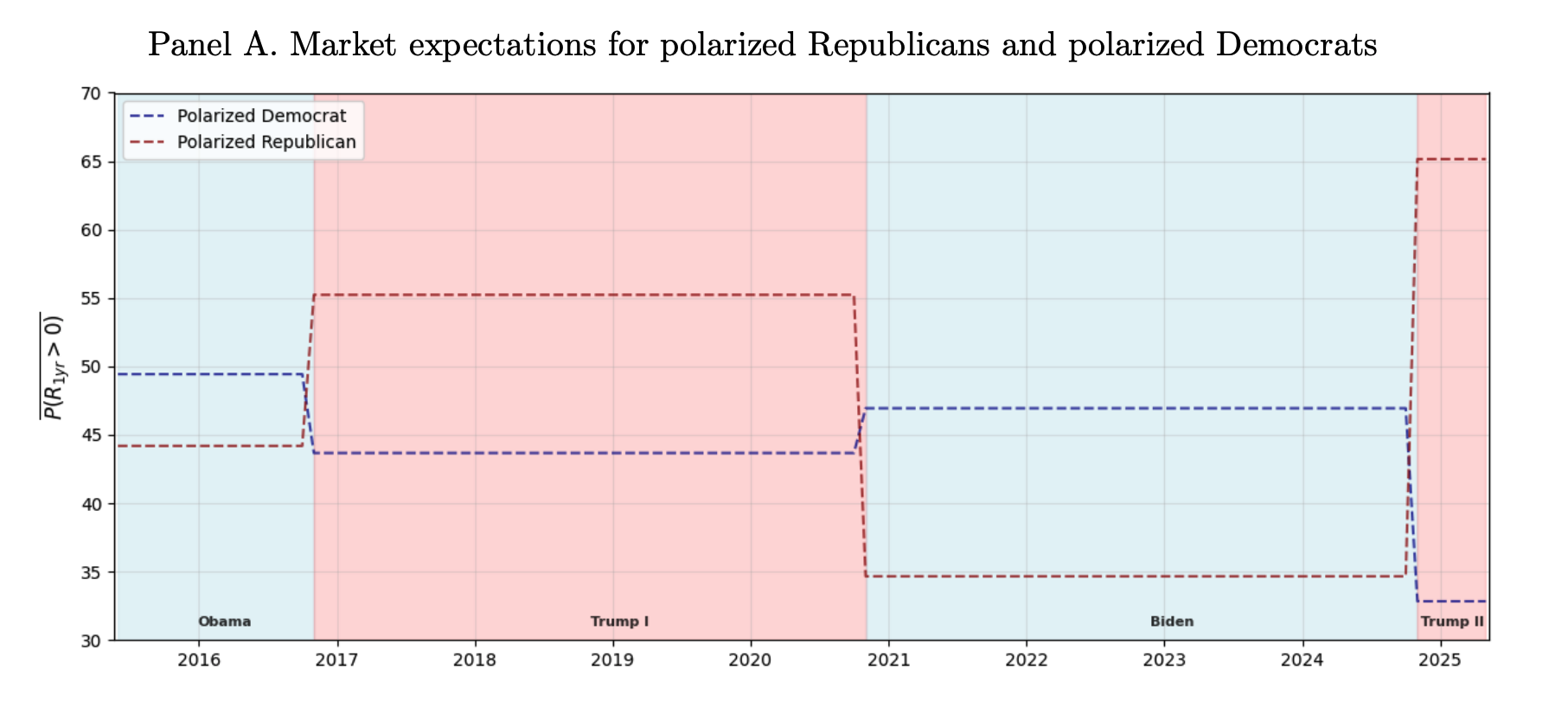
The authors believe that people who are adjusting their expectations want an outlet to express their identity. Republicans who adjusted their portfolio risk lower during the Biden administration missed out on above-average returns for those four years. Your portfolio is the wrong place to let those emotions run wild, since the factors affecting investments have been fairly stable.
One barometer is the top marginal tax rate. It has been between 39.6% and 35% since 1993.² Economic issues, the ones that affect the market the most, have been remarkably stable and are likely to remain that way.
In addition, a new Nationwide survey found that 40 percent of investors have already changed their savings or portfolios ahead of next week’s midterms. Among Gen Z investors, it’s 72 percent. And 76 percent of investors think the economy will be greatly affected if the party they oppose wins.³ That’s a powerful example of politics influencing financial decisions.

Those adjusting their portfolios are unlikely to benefit. History shows politics don’t affect markets as much as people think. The evidence shows that regardless of which party is in charge of the White House and Congress, markets produce positive returns. JPMorgan analyzed returns from 1937 onward and found that returns ranged from 9.4% to 17.1% depending on who controlled the two elected branches of government.
My stewardship journey of retirement planning and generosity will not be helped if I move a chunk of my portfolio to cash and miss out on a 9.4% return for two consecutive years. I’ve also analyzed the gap between 9.4% and 17.1%, and it is driven more by coincidence than by political change. For instance, stock returns during the George W. Bush presidency are lower because he took office as the dot-com bubble was bursting in the early 2000s.⁴
So, what should you do if you feel strongly about the results of the upcoming election? My first suggestion is to reread this article, recognize if you are vulnerable, and don’t do anything. Your identity is in Christ; you can manage your emotions, and history favors the patient.
The second is to find an outlet for your concerns. Scale back your purchases and establish a fund to donate to political candidates in future elections. It will likely be less costly than expressing your concerns in your portfolio, and you will have the peace that comes from action.
Third, celebrate the return of the Gecko, the Emu, Mayhem, and Jake as the political ads disappear and the funny insurance ads can fill up the commercials between touchdowns and volleyball spikes.
